
Turning Data Into Action: How a Sanitary System Evaluation Prevented Costly Failures at Sheppard Air Force Base

An essential mission unfolded at Sheppard Air Force Base — a deep dive into the sanitary sewer system network.
The Sanitary Sewer Study project wasn’t just about updating a GeoBase dataset; it delivered the most critical insights to manage their system’s investment needs. By transforming fragmented data into actionable intelligence, Halff partnered with Sheppard to establish a foundation for not only system renewal needs, but long-term resilience and functionality critical for military operations.
Background
Sheppard Air Force Base (AFB) sits in Wichita County, Texas, as one of the largest and most diversified training bases serving the United States military.
In early 2021, Sheppard AFB set out to understand what was causing their treatment plants to operate above capacity. This investigation led to examining infiltration and inflow concerns, possibly from cross connections between their stormwater and sanitary sewer systems. The evaluation project followed suit.
With funding secured, this sanitary system evaluation project was designated as a priority. The utilization of Halff’s full toolbox gave access to a full spectrum of services through a single provider. A comprehensive condition assessment was conducted for an impressive 86,000 linear feet of sanitary sewer pipes and 451 sanitary sewer manholes.
By assessing both stormwater and sanitary systems, the stakeholders obtained a much-needed comprehensive view of the community’s infrastructure.
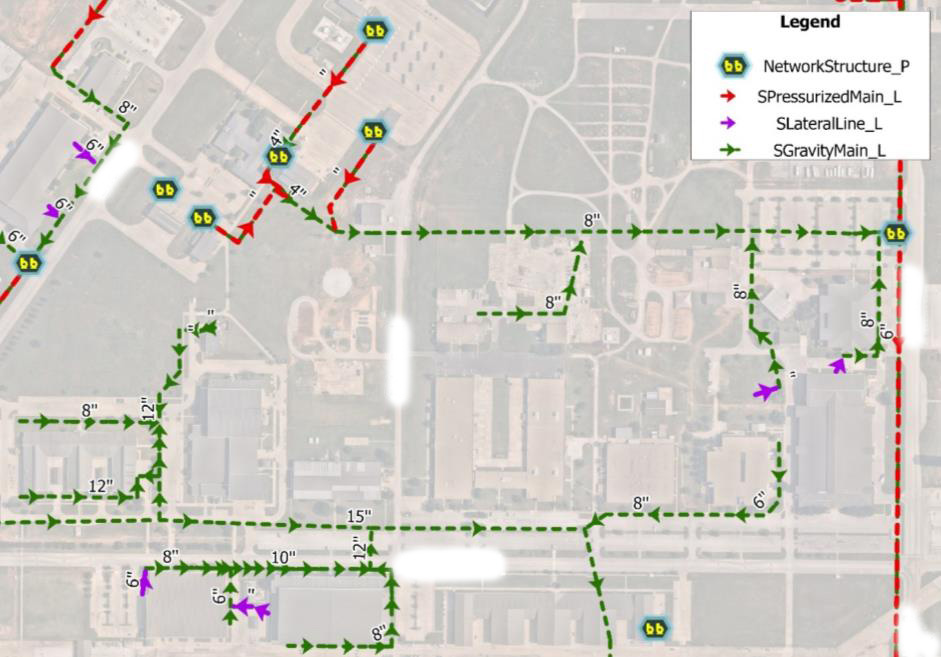
Sewer laterals mapped in the GIS database.
Challenges
The project faced several notable challenges:
-
-
- Date Gaps: The existing GeoBase sanitary sewer dataset had significant incorrect data and completion gaps, particularly in terms of spatial location, attributes and metadata. Working to address these gaps would require meticulous coordination and quality assurance/quality control to bring the consistency needed in the system.
- Physical Access: Many sanitary sewer structures were difficult to access for inspection and validation, leading to potential discrepancies in the dataset.
- Condition Assessment: The need for a thorough condition assessment of the sanitary sewer pipes and manholes required extensive fieldwork, including CCTV inspections and manhole evaluations.
- Coordination and Documentation: Ensuring consistent and accurate data entry, documentation and process improvements across various phases was critical. The multiple teams and groups involved required extensive communication. From environmental to contract management groups, the operations group and more, collective efforts were strongly coordinated over a one-year period.
-
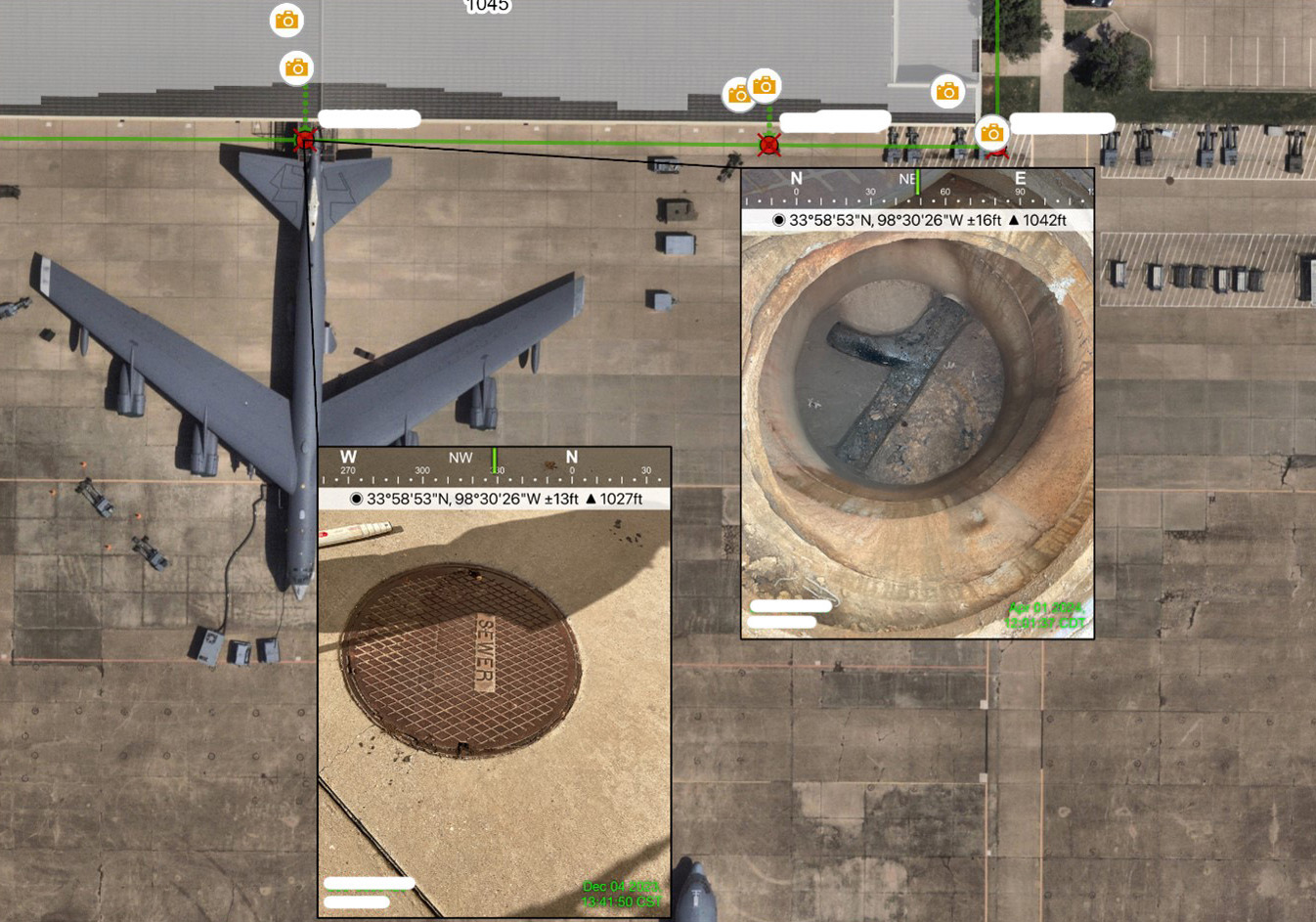 Sanitary sewer manholes were identified, with photos points linked to the corresponding location as geodatabase attachments.
The biggest challenge was establishing access to different parts of the system, particularly the force mains.
The team had to verify locations of the physical access points. Emerging from this, Halff also produced the Remaining Useful Life (RUL) predictive output and the AutoCAD file data gap analysis. The top side of full-descent manholes were inspected by Halff, as well, which runs into the stormwater system.
Approach
The Halff team thoughtfully carried out the project in multiple phases, each with specific goals and methodologies:
Phase 1 – Overall Work Plan and Schedule
-
-
- Developed a structured work plan and schedule based on the client’s project goals and expectations.
-
Phase 2 – Base Kickoff and Project Meetings
-
-
- Conducted kickoff meetings, presenting project objectives, discussing the draft work plan and clarifying project details. This was essential for setting the stage for a successful turnaround.
-
Phase 3 – Geospatial Dataset Accuracy and Usability Assessment
-
-
- Identified spatial and topology issues, including missing manholes, overlapping gravity and pressurized mains, and inconsistent flow directions, which impacted modeling reliability.
- Verified attribute and metadata gaps in key fields such as invert elevations, pipe diameters and operational status.
- Recommended improving metadata, standardizing editing processes, filling in critical missing attributes and converting CAD lateral data into GIS.
-
Phase 4 – Site Visits, Inspection and Data Collection
-
-
- Targeted spatial location and key attributes of 826 targeted sanitary sewer structures, successfully validating 624 through GPS collection and elevation/depth measures. This effort corrected discrepancies in the original GeoBase.
- Performed condition assessment on 86,000 feet of sewer mains and 451 manholes using CCTV and full-descent inspections, along with additional QA/QC of footage, producing a robust dataset of inventory and condition information.
-
Phase 5.1 – Reconcile and Update GeoBase Layers
-
-
- Used the field survey, condition assessment data and as-built plan sets to bring the data together, updating the GeoBase sanitary sewer dataset
-
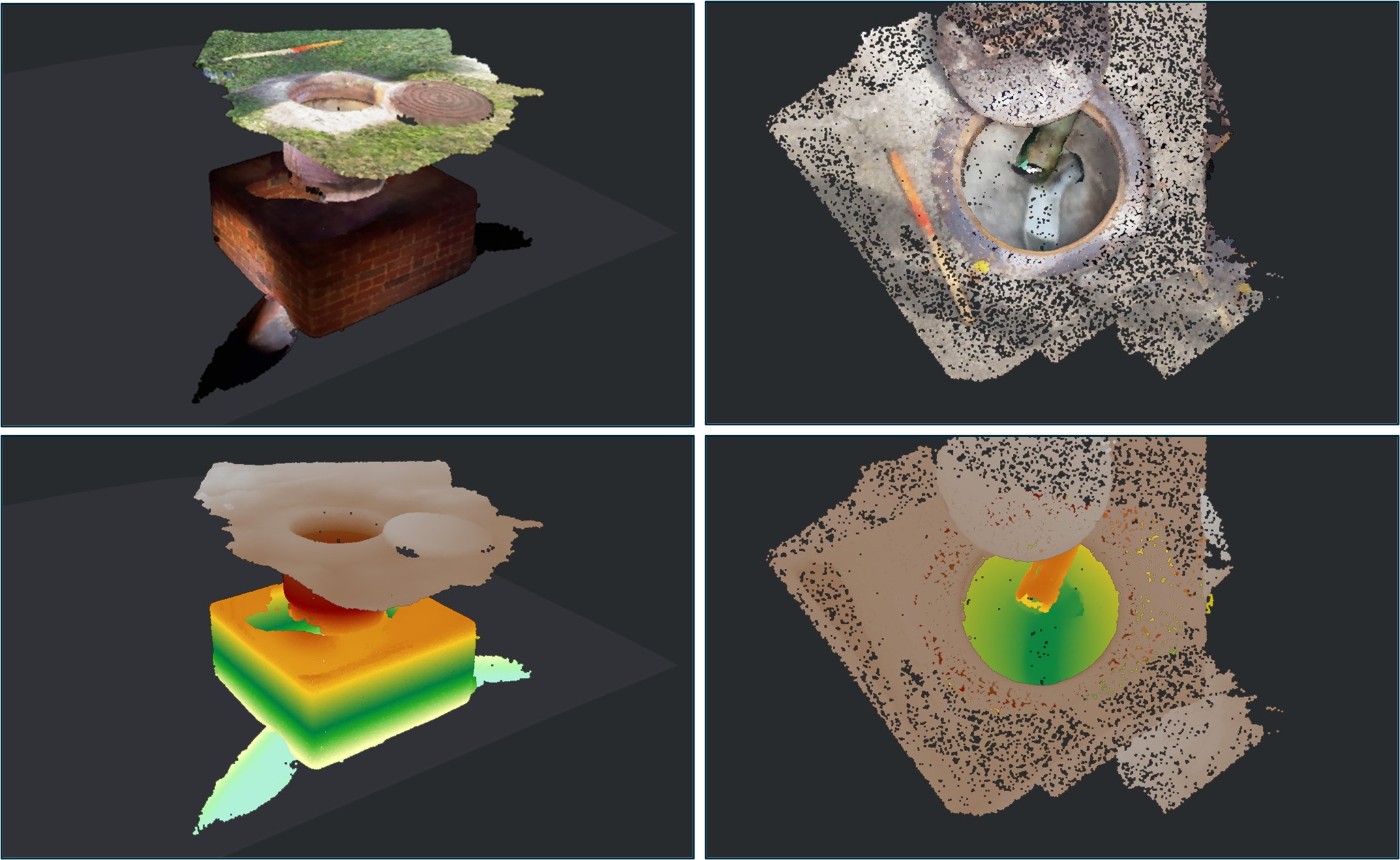 Lidar data represented the sanitary sewer manholes and connecting pipes.
Phase 5.2 – Analyses Using GeoBase Datasets
-
-
- Developed performance metrics and level of service goals and key performance indicators during this final stage, which included prioritized corrective actions.
- using condition scores, material data and analytical modeling. This provided Sheppard AFB with actionable insights for asset management that’s proactive and cognizant of long-term infrastructure resilience.
-
Results
Map of sanitary sewer pipes from machine learning model, capturing a remaining useful life forecast.
Sheppard AFB’s sewer modernization effort transformed an outdated, unreliable dataset into a clear picture of the system’s true condition and long‑term viability.
The project delivered not just better data, but a deeper understanding of structural health and remaining useful life across the network.
The Halff team meticulously validated the spatial location and key attributes for hundreds of crucial structures such as manholes, cleanouts, septic tanks and more. It ultimately empowered them with precise location information and measurements for these vital point assets.
“The amount of detail and high quality of the study allowed a major failure found near one of our buildings to be quickly added to our yearly Facility Board in record time. [The] project manager was an excellent communicator and initiated meetings to report progress and clarifications whenever needed.”
The remaining useful life analysis provides insights that are fundamental in developing a long-term sustainability plan. It gives the utility a 20-30-year outlook for necessary near-term repairs. This plan became a pivotal communication tool for stakeholders, outlining a clear roadmap of what needed replacement, when and at what cost.
Halff’s partnership in this project for Sheppard AFB helped them prioritize their next corrective actions, as the team recommended immediate structural repairs for high-priority sanitary sewer pipes with a planning-level cost estimate of $3.1 million for full-pipe replacements and $1.4 million for specific rehabilitation.
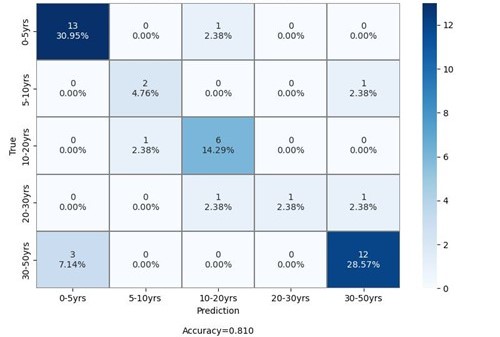
The machine learning model extrapolated pipe condition prediction and remaining useful life (RUL) with an accuracy of 81% or better.
This ultimately addressed the need for catch-up in sanitary sewer rehabilitation, estimating an increased average replacement budget of $2.9 million per year to account for pipelines that have already exceeded their average service life.
Sheppard AFB is now equipped to make sure its systems operate with unparalleled efficiency and quality.
Laying the groundwork for a sustainable future requires excellent data; thanks to the power of Halff’s professional expertise and technology, Sheppard Air Force Base will benefit from this sanitary sewer system investment for years to come.
Do you know your sanitary system’s health? Our professionals bring years of water resources knowledge on sanitary system evaluations for a variety of infrastructure placements. Let Halff help you take the first step by contacting Infrastructure Management and Data Analytics Practice Leader Elizabeth Young (eYoung@halff.com) or Water Resources Project Manager Cooper Hoffman (cHoffman@halff.com).
Recent Stories

Inside Halff: A Look at May 2026
Halff projects earned national recognition for engineering excellence, while the firm was honored for its impact on communities and the…

AML’s Convention | June 17-19, 2026
Come see Halff at AML’s 92nd Convention. Taking place June 17-19, 2026, in Little Rock, Arkansas. Event: Arkansas Municipal League,…